Machine Learning Applications in Portfolio Management
Every day, billions of dollars' worth of decisions are made. But what makes those decisions right; experience, intuition, or data? At its core, portfolio management is an art of decision-making: reading available data, interpreting it, and making the right move at the right time.
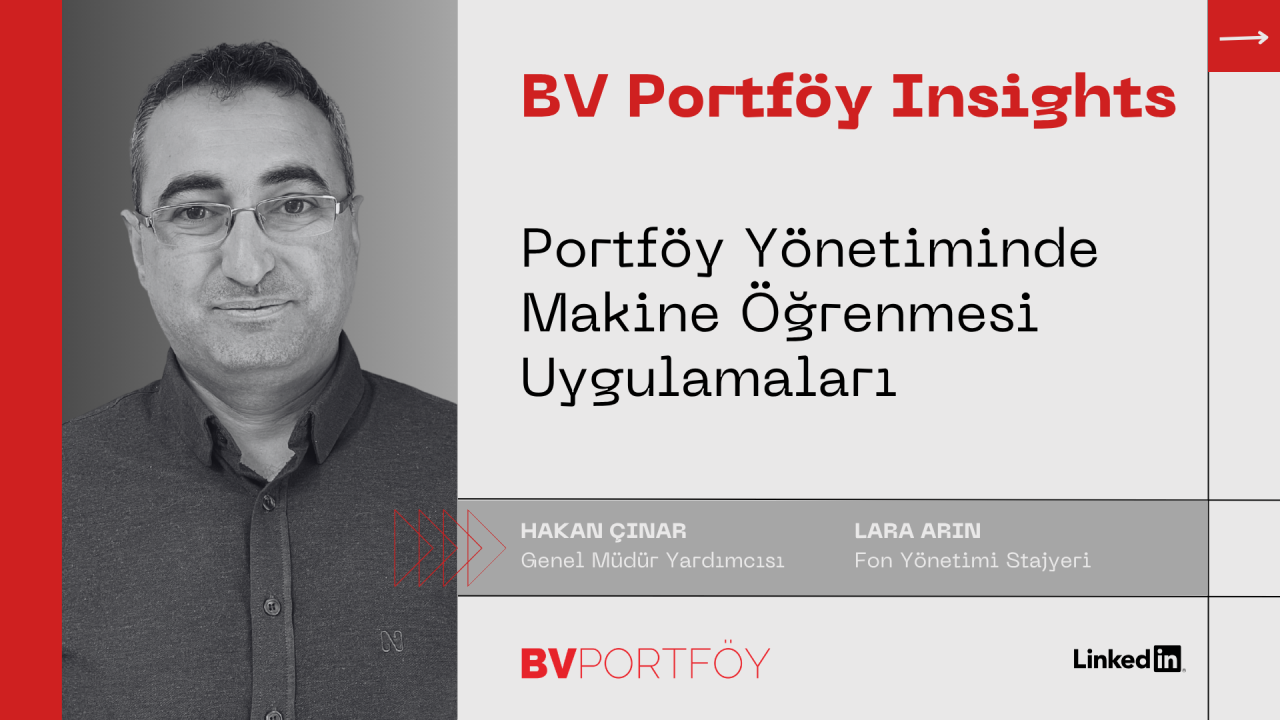
Every day, billions of dollars' worth of decisions are made. But what makes those decisions right — experience, intuition, or data? At its core, portfolio management is an art of decision-making: reading available data, interpreting it, and making the right move at the right time. The better this process is managed, the better the outcomes. So how does machine learning fit into this process? Why are algorithms and models being developed, and why are major financial institutions investing millions of dollars in these areas?
It is nearly impossible to ignore the fact that the financial world has evolved hand in hand with technology. Looking back through history, the diversification of investment instruments used in the market and the ease of investing through digital interfaces have both expanded the industry and transformed professional roles.
But the real driver of this transformation is not simply an enthusiasm for technology — it is the sheer volume of data that has become increasingly difficult to manage. In traditional portfolio management, analysis was built around a handful of core variables: price, volume, and fundamental financial ratios. Today, however, investment decisions are intertwined not only with financial statements, but also with news feeds and an ever-expanding universe of alternative data.
The human mind is no longer capable of generating fast, rational decisions in the face of this data density. While traditional models excel at capturing regular and predictable relationships, they frequently miss the patterns embedded in the market's complex and shifting structure. This is precisely where machine learning steps in — not merely as a supporting tool, but as a strategic necessity capable of uncovering hidden connections among billions of data points within seconds.
As portfolio management absorbs this technological transformation, the decision-making mechanism has shifted from human intuition to data-driven algorithms. Today, the answer to "Which asset should be invested in, when, and how much?" is shaped by machine learning across four core areas of expertise:
Asset Price Forecasting and Signal Generation: Machine learning does not merely predict future prices; it also analyzes changes in volatility and correlation across assets. Algorithms scan historical data for patterns, generate buy and sell signals, and deliver high-probability forecasts about the direction of price movements.
Risk Management and Anomaly Detection: ML models detect market shocks and unusual movements (anomalies) far faster than the human eye. Particularly during unpredictable crisis moments — known as "Black Swan" events — they automatically update risk limits to shield the portfolio.
Sentiment Analysis and Alternative Data Processing: This goes beyond traditional tables. Using NLP (Natural Language Processing) techniques, social media feeds, news streams, and corporate reports are analyzed within seconds. By measuring the market's "mood," the impact of public sentiment on prices is incorporated directly into portfolio strategy.
Optimal Portfolio Selection and Transaction Cost Optimization: The static models of Modern Portfolio Theory (Markowitz) are now giving way to Deep Learning-based dynamic optimization models. These models not only select the best asset allocation — they also plan how large orders can be executed with the lowest possible transaction cost without disrupting the market.
Meet BV Portföy Funds
To diversify your portfolio and minimize risks, you can explore our funds offered through BV Portföy's machine learning-powered portfolio management.
BVD – First Variable Fund
- Investment Thesis: Flexible portfolio management designed to quickly capitalize on emerging market and sector opportunities.
- Portfolio Approach: Balanced risk-return profile, rapid entry into emerging markets and sectors, dynamic rebalancing, flexible adjustment to market conditions.
- Who is it for? Ideal for investors who want to respond quickly to market opportunities and seek a flexible portfolio structure.
BSD – Free Foreign Exchange Fund
- Investment Thesis: Managed with the flexibility of a free fund structure to capture opportunities in currency markets. The objective is to generate currency-based return potential across varying market conditions.
- Investment Approach: Currency-denominated assets and currency-linked financial instruments; flexible positioning in response to market conditions; active management through long and/or short positions.
- Who is it for? Suited for investors who wish to benefit from fluctuations in currency markets and seek a more flexible, actively managed strategy.
To put it even more simply, what the financial world is trying to do is use the data at hand to anticipate future price movements. In the traditional approach, this process required specialist teams working across distinct stages. Machine learning, on the other hand, addresses this entire process in a holistic manner. The analytical capabilities that professionals have refined over years of experience can now be scaled through the very algorithms those professionals build.
The focus will no longer be on personally conducting analysis and making decisions — it will be on building the right model and transferring accumulated knowledge to the machine. The most valuable professional will not be the one who performs the best analysis, but the one who trains the best model.
The most effective way to manage your investments with confidence, diversify your portfolio, and minimize risk is through the expertise of BV Portföy.
For more information, feel free to reach out at any time: www.bvportfoy.com
To invest, contact us at: [email protected]
Discover Trending Funds



Apply now to start
smart investing
We will get in touch with you ASAP!
We've received your request, and our team will be in touch with you shortly. Please stay tuned, and thank you!